Person-to-person (P2P) conflict can change a conversation in seconds. A voice becomes sharper. Someone interrupts. A face tightens. One person feels attacked, while the other begins preparing a defense. Before long, the original problem is buried beneath anger, blame, assumptions, and misunderstanding. Happens all the time.
Most of us have experienced this, yet few of us were ever taught a clear process for working through conflict with another person. This is P2P-conflict resolution. We were taught many important subjects—but not the basic language of peace, or even the basic process of peace, beyond winning or surrendering (fight/flight/freeze).
What Is PeaceDNA?
PeaceDNA is a practical language and process for navigating person-to-person (P2P) conflict. It provides the knowledge needed to slow the exchange, understand what is actually happening, and explore strategies that might improve the situation for everyone. Like a checklist, map, or recipe, PeaceDNA keeps the essential parts accountable so that important information is less likely to be forgotten or overlooked, especially the Conditions needed for peaceful engagement. Its design creates a simple ecology: each part affects the others, and all the parts work together to guide the conflict toward a possible Remedy.
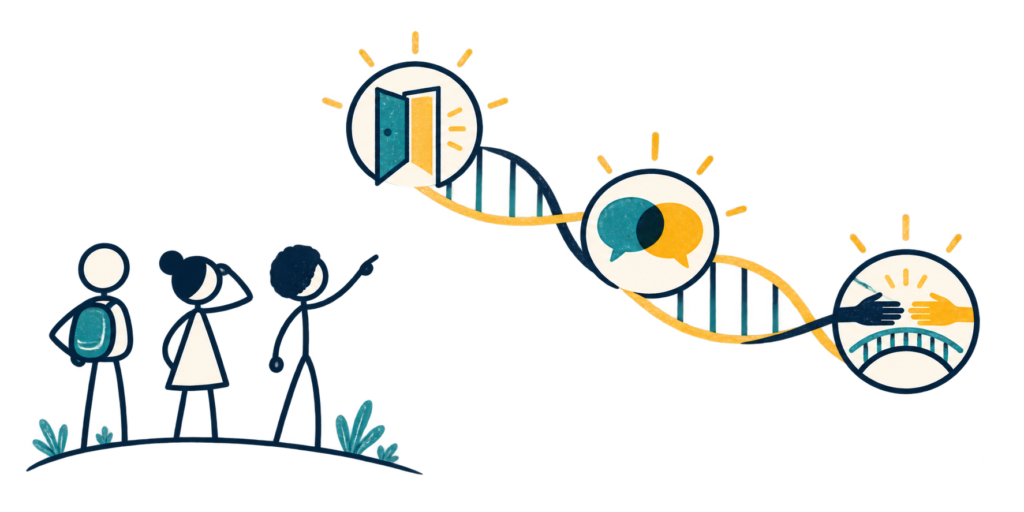
The name PeaceDNA is a metaphor. It refers to the essential building blocks of peaceful conflict resolution—not biological DNA.
Welcome
This blog will be both familiar & brand new information, to take in and put together. It is a collaboration between ChatGPT and me, which was, at times, surprising. It’s not a quick, easy read, so go slowly and pause to reflect on concepts that grab your attention. Consider them with an open mind, take what you like, add your perspective, and share your thoughts in the comments. Be kind.
The cost of this knowledge is nothing more than your attention & open-minded consideration. No registration. No obligation. No strings attached. Nothing to download or buy later. It’s all here: the full PeaceDNA and basic skills set, and more. Just read, reflect, use what helps, and if you find value here, please pay it forward.
Introduction & Overview
We are often told to “talk it out,” but rarely shown exactly how. PeaceDNA offers a practical Map of questions for navigating everyday P2P conflict. A basic and unique handbook on how to: ‘talk it out’.
The DNA Map outlines three Steps—Conditions, Conflict Positions, and Remedy—supported by three communication skills: FOUL Buster, Kanji Listening, and Rephrase for Yes. Together, they help people manage verbal conflict and direct further action if needed. This process helps people understand each other more fully and turn potential empathy into compassionate action (ie: Remedy).
PeaceDNA Language/Definitions
Many theories and methods are built on assumptions about the meanings of basic words and terms and how they fit together. There is much interpretation involved. They often promote the same thing but in different ways, and then argue or take exception. Such assumptions can easily create resistance, arguments, and unhealthy distraction. PeaceDNA begins by putting us all on the same page with Terms & Definitions.
PeaceDNA Step 1-Conditions
Before solving a conflict, we ask a more important question: Are the Conditions right for peace or even dialogue? Is it safe? What is at stake?
PeaceDNA’s first Step checks that both people are willing, ready, safe, and free to speak or leave. Conflict does not require perfect calm—but it does require genuine choice. Sometimes the next peaceful step is talking. Sometimes it is listening, pausing, seeking help, or leaving. It has to be voluntary.
PeaceDNA Step 2- Conflict Positions
Every conflict contains at least two stories. PeaceDNA calls each story a Conflict Position: one person’s understanding of what happened, how it felt, and what it meant. PeaceDNA Step 2- Conflict Positions separates that problematic experience into Facts, Feelings, and Beliefs. Three Guiding Questions reveal them as: What happened? What did/do you feel? What did/do you believe it meant?
The goal is understanding, not forced agreement. By clarifying both Conflict Positions (out loud), people can uncover differences, assumptions, and shared ground. Blind spots can be seen. New connections can be discovered.
PeaceDNA Step 3-Remedy
Remedy exists to turn understanding and empathy into peaceful action, aka compassion. You feel empathy and show compassion. PeaceDNA asks two GQs: “What do you want now to solve this conflict peacefully?” and “What will you offer now to solve this conflict peacefully?”
When reasonable Wants connect with voluntary Offers and Actions, a clear Peace Agreement can form. If they do not align, return to Conditions or Conflict Positions. Remedy must remain safe, lawful, realistic, specific, and freely chosen. It may or may not repair a relationship, strengthen boundaries, create distance, or end contact.
-Skills set: FOUL Buster
FOUL Buster: Turning a Verbal Attack Toward the Problem
The FOUL Buster is a Safe Defense skill for responding to a verbal attack when it is safe to keep talking. A FOUL may be an insult, accusation, put-down, hostile judgment, or offensive name intended to hurt, humiliate, or compel. If a threat makes the situation unsafe, use Peace Moves, and/or leave and seek help.
This skill does not require accepting an insult, agreeing with an accusation, surrendering a boundary, or remaining in an unsafe situation. It may help guide a conversation with Kanji Listening, clearer Conflict Positions, and PeaceDNA knowledge. However, it is not designed for immediate danger, abuse, coercive control, or credible threats. When safety is uncertain, creating distance, leaving, seeking help, or contacting emergency services comes first.
-Skills set: Kanji Listening
Conflict becomes harder when listening turns into waiting for our chance to answer. Kanji Listening asks us to do something different: listen first to understand the person’s complete Conflict Position. That means hearing the Facts they observed, the Feelings they experienced, and the Beliefs that give those experiences meaning—even when we remember events differently.
The name draws on five Japanese kanji symbols used as reminders of a deeper kind of attention. Together, they point toward listening with the ears, eyes, mind, heart, and full presence (as if listening to a King speak). Kanji Listening is not passive agreement, surrender, or acceptance of harmful behavior. It is an active PeaceDNA skill for slowing the exchange, noticing words and body language, asking useful Guiding Questions, and checking whether we understood correctly.
When people feel genuinely heard, defensiveness may soften. More of the real Problem can emerge, creating a stronger foundation for empathy, cooperation, and a practical Remedy that respects everyone involved.
-Skills set: Rephrase for ‘Yes’
Rephrase for Yes (R4Y) is a PeaceDNA skill for checking whether you correctly understand a person’s meaning. Instead of arguing, correcting, or preparing a defense, you restate what the speaker has already expressed but as a question: “Are you saying…?” or “Do you mean…?” When the rephrasing is accurate, the speaker can think, decide, and honestly answer, “Yes.” That agreement confirms understanding and may help slow defensiveness and encourage cooperation.
An effective R4Y changes the words, not the meaning of what was said. It does not add motives, judgments, commands, suggestions, facts, or feelings the speaker never expressed. The speaker also remains free to say no, correct something, or explain further. Rephrase for Yes works closely with Kanji Listening because the first thing is to listen for the speaker’s Facts, Feelings, and Beliefs; then reflect that Conflict Position profile back accurately. The purpose is not to collect agreement or prove who is right. The R4Y purpose is to help two people know they are on the same page.
-Body Language
Words tell only part of a conflict story. Body language—including changes in posture, movement, breathing, facial expression, distance, and voice—can signal that something important is happening or changing. This PeaceDNA section explains how to notice those signals without pretending to read another person’s mind. An observable movement may be a Fact, while its meaning remains a belief that requires context.
Intention describes a message that someone is sending. Intuition describes the early impression a person receives. Both can offer useful information. Both are on the same level and neither is always clear or correct.
The guiding principle is simple: observe with confidence and interpret with humility. Use intuition to notice possible trust or risk, evidence and context to assess, and boundaries to protect yourself. When Conditions allow, a respectful Guiding Question can clarify what body language may mean. When danger is present, safety comes first. PeaceDNA helps turn nonverbal signals into thoughtful choices rather than unsupported judgments or accusations.
-Examples of Applied PeaceDNA
Knowing PeaceDNA is important. Seeing it used in a real conflict makes the process easier to understand. The examples in this section place PeaceDNA in familiar situations—at home, at school, on the street, in the community, and at work.
You will see disputants use PeaceDNA for themselves, classmates step into an escalating disagreement, informal street mediators ask calming questions, and HR facilitators guide respectful workplace conversations.
Some examples use the complete three-step process: Conditions, Conflict Positions, and Remedy. Others show how one well-timed question, a FOUL Buster, Kanji Listening, or a Rephrase for yes can change the direction of a conflict.
These examples aren’t scripts for anything other than showing how PeaceDNA might apply and how things could unfold. They demonstrate choices, questions, and possible pathways. They are for teaching. They show how things can fit together. As you read, notice how PeaceDNA slows the exchange, separates Facts from Feelings and Beliefs, protects respectful Conditions, and helps people explore practical Actions toward peace. Enjoy (this is easy reading).
Application Examples
- Example (Basic mediation Flow)
- Example (Basic PeaceDNA)
- Example (Between Educators)
- Example (For HR Professionals)
- Example (Between Youth Workers)
- Example (From a Bi-stander POV)
- Example (For Own Self Use)
- Example (As First Person)
Lesson & Learning Plans (100% AI)
2. Learning Plan for HR Professionals
3. Learning Plan for Youth Practice
4. Group Lesson Plan for Youth
5. Group Lesson Plan for FOUL Buster
6. Group Lesson Plan for Kanji Listening
7. Group Lesson Plan for Body Language
8. Teen Practice Guide for Street Mediation
9 .Group Lesson Plan for Street Mediation (Teacher-Guided)
-Join the Conversation
Have thoughts or questions? Share your perspective and help me and others learn from your experience and knowledge. Together, we can build the peace education that we so desperately need. Be kind.
-Contact & About
My name is Dan, and I’ve based my part of this AI PeaceDNA design on 45 years of peacemaking & mediation experience, including 10 years as Director of the Peace Education program at the Peace Learning Center (PLC) in Indianapolis, IN. I have served as a mediator for the Marian County Juvenile Alternative Courts. I am also a Black belt & Sensei and teach a non-violent self-defense called Safe Defense, available at BullysDojo.com. Again, there’s no cost involved. Check it out.
PeaceDNA is about P2P Conflict resolution and is the foundation of Safe Defense and, along with its optional add-on companion Peace Moves (BullysDojo.com), provides a system of True self-defense with ‘just out of reach’ hopping movement adapted from Kosho-Shorie Kenpo (B. Juchnik & T. & M. Mitose).
Together, these two distinct but effective skills (PeaceDNA & Peace Moves) create a Safe Defense that allows you to protect yourself without injuring your attacker: True self-defense. Bringing this to people’s attention is where I feel my mission lies. All this work is offered for free and with only altruistic intention.
I worked with ChatGPT to lay out this archetype for conflict resolution. I will admit that it brought a lot to the table. PeaceDNA is a model so elegant and natural that it empowers both the novice peacemaker and the pro. It is my honor to present it here. I ask for anonymity and that you pay forward what you find useful. I’m as frightened for our children as any parent and grandparent. Without a peace vocabulary or understanding of conflict resolution, we are doomed to live in another peace-ignorance generation. We can do better.
If you need help understanding PeaceDNA P2P-Conflict resolution or want to collaborate? Reach out to Daniel@TalkingItOut.org, and I’ll try to respond in a timely manner. Let’s make this an exciting time for Conflict Resolution. Time to grow.
Comment