Peaceful Action Begins Before the Problem Is Even Discussed
Imagine trying to resolve a disagreement while one person is shouting, threatening, intoxicated, terrified, or trying to leave. The Problem may matter, and both people may want relief. Yet the Conditions may not support peaceful conflict resolution—not yet.
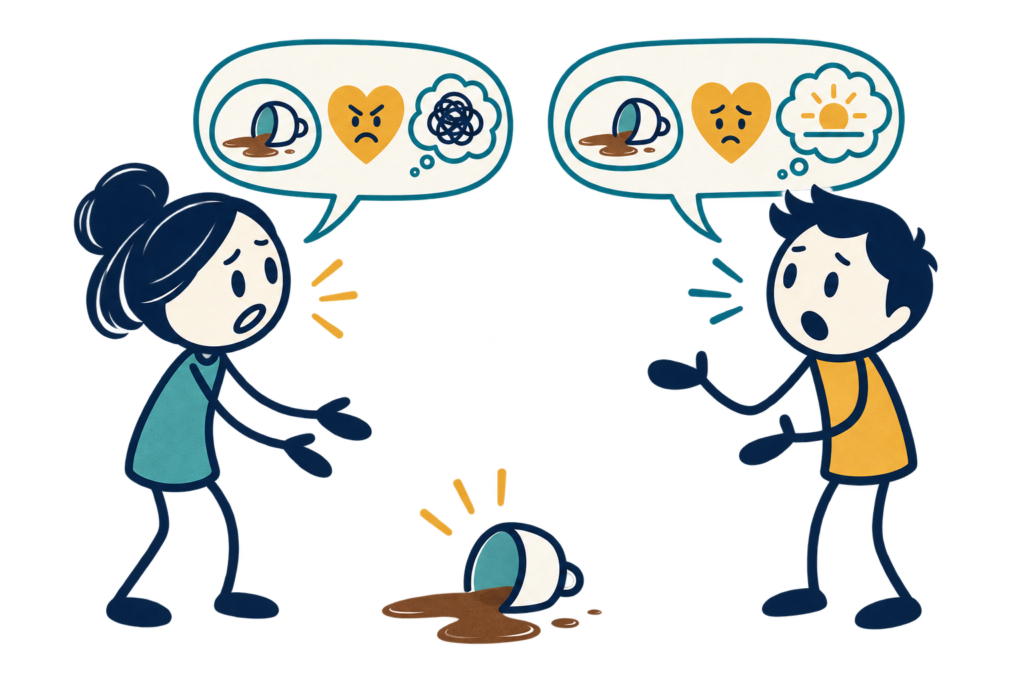
GQ #1: Are we ready and willing?
That is why PeaceDNA begins with Step 1: Conditions. Before exploring any person’s Conflict Position or searching for a Remedy, ask:
“Are we ready and willing to address this conflict peacefully?”
The answer does not need to be enthusiastic. “I am willing to try” may be enough. Conditions do not need to be perfect. People do not need to be completely calm, comfortable, or confident. However, both people need a reasonable level of safety, freedom, and self-control. There must be no FOULs present.
What Are Conditions?
Conditions are the circumstances that determine whether peaceful participation is reasonably possible. They include:
- Willingness to participate.
- Physical and emotional safety.
- Freedom to speak, disagree, pause, or leave.
- Tone, words, body language, and physical distance.
- Emotional intensity, fear, fatigue, illness, or impairment.
- Timing, location, privacy, and outside pressures.
- Differences in authority, dependence, and power.
- Whether support or a formal process is needed.
To ask a simple, genuine question that covers it all, PeaceDNA uses: ‘Are you ready & willing?’ A conversation is not peaceful merely because no one has become physically violent. Threats, intimidation, humiliation, coercion, retaliation, stalking, controlling behavior, and persistent verbal aggression can also prevent free participation. These are FOULs and are poison to Peace.
Peaceful-sounding words do not always create peaceful Conditions. Someone may speak calmly while using employment, money, housing, family access, or social pressure to compel cooperation. Conditions must therefore be judged by more than appearances. Patterns of behavior, power differences, possible consequences, and each person’s freedom to refuse may reveal more than a calm voice.
Conditions Are the Foundation
PeaceDNA follows a three-step path:
Conditions → Conflict Positions → Remedy
After Step 1 (Conditions) is satisfied, it’s time to move on to Step 2, when each person’s Conflict Position is explored through Facts, Feelings, and Beliefs (GQ #2, #3, #4). Just 3 questions to remember. After which (with or without rephrase) comes Step 3, when possible Remedies are considered.
Neither Step 2 nor 3 works well without adequate Conditions. When Step 1 Conditions are weak:
- Facts may be hidden or carelessly disputed.
- Feelings may be dismissed or turned into accusations.
- Beliefs may be presented as proven Facts.
- Guiding Questions may feel like an interrogation.
- Rephrasing may sound mocking or controlling.
- A proposed Remedy may become a demand.
- Agreement may result from fear rather than consent.
Strong Conditions do not guarantee resolution. Weak Conditions, however, can prevent honest communication even before the Problem is discussed. Failure to launch.
Willingness Must Be Voluntary
PeaceDNA depends on voluntary participation. It’s not a trick, and it’s not a hustle. It’s a recipe for P2P conflict resolution. No one should be compelled to:
- Begin or continue a conversation.
- Accept another person’s account as true.
- Feel or display empathy.
- Forgive or reconcile. Say “sorry”.
- Surrender a boundary.
- Agree to a Remedy without understanding.
- Remain near someone they fear.
- Negotiate directly with someone abusing or controlling them.
A person may agree to talk but then later change their mind. An agreement to begin is not an agreement to continue if the Conditions worsen. A spoken “yes” does not always represent free agreement. Someone may say yes because they fear punishment, humiliation, job loss, retaliation, abandonment, or physical harm.
PeaceDNA’s Rephrase for Yes should not be used to gather agreements or manufacture consent. Confirming that someone has been understood is not the same as gaining agreement to a Remedy.
Safety Comes Before the Process
PeaceDNA is intended for situations in which peaceful participation is reasonably possible. It does not require anyone to remain in danger, negotiate with an abuser, or continue against their will.
When violence, credible threats, stalking, severe intimidation, coercive control, or immediate danger is present, safety takes priority. A safer response may involve:
- Leaving or creating physical distance.
- Contacting emergency services.
- Seeking help from someone trusted.
- Consulting an advocate, counselor, attorney, or qualified professional.
- Using a formal reporting or protective process.
- Avoiding direct contact.
Direct conversation is not always the most peaceful choice. Separation, firm boundaries, outside intervention, or no further contact may be more responsible.
PeaceDNA is a peace-education framework. It does not replace emergency assistance, legal advice, mental-health care, professional mediation, workplace procedures, or services for people experiencing abuse.
Power Changes the Conditions
Not every conflict involves two people meeting as equals. Power differences may exist between a manager and employee, parent and child, teacher and student, landlord and tenant, police officer and civilian, caregiver and dependent adult, or aggressor and target.
An invitation to “talk it out” may carry an unstated threat. The person with less power may wonder:
- Will I be punished if I disagree?
- Could this affect my job, grade, housing, care, or relationships?
- Can I leave without consequences?
- Will my words be used against me?
- Am I being asked for understanding—or obedience?
Fair participation may require an advocate, union representative, human-resources professional, counselor, attorney, trained mediator, or other appropriate support. A third party does not automatically make the process fair. That person must understand the authority, dependence, and risks involved. In some situations, the two people should not meet directly at all.
Readiness Does Not Require Perfect Calm
People may want peace and still be unready to talk. Someone may be too angry to listen, too frightened to speak freely, too exhausted to think clearly, impaired, overwhelmed, or unable to remain non-aggressive. Age, disability, illness, language barriers, or emotional distress may also make support necessary. These Conditions do not make someone bad or unreasonable. They may mean the conversation should wait, change format, include assistance, or not occur directly.
PeaceDNA does not require people to hide their Feelings. Someone may cry, speak firmly, request more time, or show distress while still participating peacefully. The question is not:
“Can everyone remove all emotion?”
It is:
“Can these Feelings be expressed without preventing reasonably safe and voluntary participation?” & “What was your experience?”
Visible ‘calm’ does not prove safety. Visible emotion does not prove danger. The goal is enough safety, freedom, self-control, and respect for the next peaceful step.
Conditions Can Change
Conditions are not checked once and forgotten. A conversation may begin peacefully and later become hostile. A painful Fact may be disclosed, a Belief challenged, or someone may begin to feel cornered or unsafe (sometimes without realizing it).
Warning signs include:
- Insults, threats, or other FOULs.
- Aggressive movement or blocking an exit.
- Ignoring requests for distance. Not listening.
- Mocking Feelings or pressuring someone to answer.
- Refusing to allow a pause.
- Threatening consequences for disagreement.
- Presenting hostile Beliefs as Facts.
- Panic, shutdown, or loss of free participation.
When Conditions weaken, return to Step 1. It may be the time to pause. A boundary might sound like:
“I am willing to continue, but not while we are insulting each other.”
“I want to address this, but I need twenty minutes to calm down.”
“I am not comfortable discussing this without another person present.”
Or simply:
“I am ending this conversation now.”
A boundary does not require the other person’s permission. It states what the speaker will or will not participate in. Pausing, leaving, or refusing an unsafe process is not necessarily a failure. Sometimes stopping is the most peaceful choice available.
Give a Pause a Purpose
A pause may restore Conditions, but it can also be used to avoid responsibility. When it is safe and appropriate, the person requesting a pause can suggest a possible next step:
“I cannot discuss this peacefully right now. Could we return to it tomorrow afternoon?”
Other options include:
- Choosing a safer time or place.
- Continuing on the PeaceDNA path.
- Communicating in writing.
- Inviting an appropriate third party.
- Meeting separately with a mediator.
- Using a workplace, school, legal, or community process.
- Deciding that direct conversation is unsuitable.
The next step remains an invitation, not a forced appointment. A pause should not become an endless excuse to ignore a legitimate Problem, but a deadline should not compel someone back into an unsafe exchange.
The goal is responsible movement—not movement at any cost.
The Four-Part Conditions Check
1. Safety
- Is there an immediate risk of harm?
- Has anyone made a credible threat?
- Can each person leave freely?
- Is anyone being stalked, controlled, or intimidated?
- Would direct conversation increase the danger?
If safety is uncertain, delay & retreat. Consider seeking appropriate help instead of forcing the conversation forward.
2. Willingness
- Is each person choosing to participate?
- Can either person pause or leave without punishment?
- Is anyone being pressured to forgive, agree, or reconcile?
- Does a spoken “yes” reflect genuine choice?
Reluctance does not always prevent conversation. Coercion does.
3. Readiness
- Is anyone too angry, frightened, impaired, or exhausted?
- Can both people listen without interruption as well as speak honestly?
- Can disagreement occur without retaliation? Can we be respectful?
- Would more time, support, or another format help?
Readiness does not require perfect calm. It requires enough self-control, safety, and freedom for peaceful participation.
4. Fairness
- Can both people speak freely?
- Is there a serious power difference?
- Could participation cause harmful consequences?
- Would an advocate or qualified third-party help?
- Would separate conversations be safer?
Fairness does not mean pretending both people have equal power, caused equal harm, or carry equal responsibility.
Try This
Before beginning a difficult conversation, ask: “Is this a safe and workable time to talk?”
Then consider:
- Can both people participate freely?
- Can either person pause or leave?
- Is either person too angry, frightened, impaired, or exhausted?
- Are FOULs, intimidation, or retaliation present?
- Could a power difference prevent honest participation?
- Would another time, place, format, or support person help?
- Should this conversation happen directly at all?
If the Conditions are adequate, move to Step 2: Conflict Positions. The formal Guiding Question #1 is: “Are you ready and willing to solve this conflict peacefully?”
If Conditions are inadequate, do not force progress. Strengthen the Conditions, change the process, seek appropriate assistance, or stop. PeaceDNA does not ask people to solve a Problem under any Conditions. It asks whether the Conditions are strong enough for the next peaceful step.
Four-Perspective Red-Team Review
1. Conflict-Resolution Practitioner
Analysis: The post treats Conditions as an active, continuing assessment and distinguishes a useful pause from avoidance.
Risk tested: Someone could repeatedly claim the Conditions are not right to escape responsibility.
Response: When safe, a pause can include a possible next step, such as another time, written communication, third-party assistance, or a formal process. This does not remove anyone’s right to avoid unsafe direct contact.
2. Trauma-Informed and Safety Reviewer
Analysis: Safety and voluntary participation come before completing the process.
Risk tested: A controlling person could use calm speech or PeaceDNA language to appear reasonable while applying pressure.
Response: Conditions are judged through conduct, power, consequences, and freedom to refuse—not tone alone. The post protects each person’s right to pause, leave, seek support, or avoid direct dialogue.
3. Teacher and Peace-Education Reviewer
Analysis: The four-part check—Safety, Willingness, Readiness, and Fairness—gives learners a practical structure.
Risk tested: Readers might memorize the language without recognizing Conditions in real conflicts.
Response: Warning signs, sample boundaries, questions, and possible next steps make the ideas easier to discuss, practice, and apply without turning them into a rigid script.
4. Skeptical First-Time Reader
Analysis: Adequate Conditions are presented as realistic rather than ideal.
Risk tested: The cautions may make PeaceDNA seem useful only when people are already calm and cooperative.
Response: The post explains that people may remain emotional, uncertain, or reluctant. Conditions only need to permit reasonably safe and voluntary participation. Changing the time, place, format, participants, or process is itself part of peaceful conflict navigation.
Comment