Willingness opens the door; Conditions and structure provide safety; Conflict Positions provide a roadmap for understanding; and Remedy is designed to reach a peace agreement.
Contained within this Step 3 – Remedy are GQs #5 & #6. Together, they create the acceptable results, which is the goal of PeaceDNA. After both people have explored the facts, what they each felt, and what they believed it meant or what they expected, the conversation can turn toward the future:
Step 1. Conditions open the door.
Step 2. Conflict Positions create empathy & understanding.
Step 3. Remedy expresses compassion; resolution agreement.
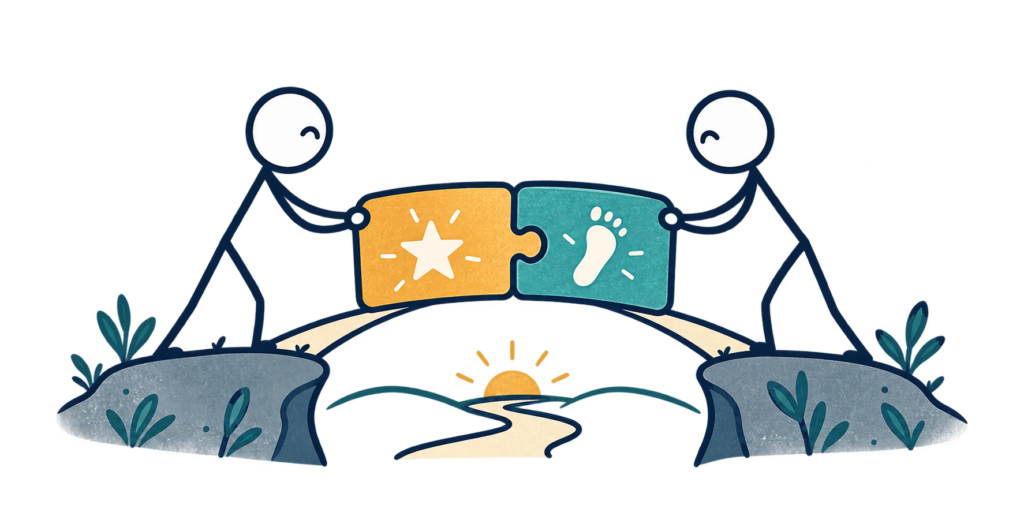
Remedy is not about proving that one person is completely right and the other completely wrong.
Moving from Positions to Remedy
Before beginning Remedy, each person should have a fair opportunity to explain their Conflict Position:
- Facts: “What happened?”
- Feelings: “What did you feel?”
- Beliefs: “What did you believe the Facts meant?” “What were they expecting?”
These questions may be asked in any order and revisited over and over as the story unfolds.
A Rephrase Question may also confirm understanding:
“Are you saying you felt excluded because you believed the decision had already been made without you?”
A “yes” confirms that the listener understood what was said. It does not prove the speaker’s Belief, establish blame, or require either person to accept a Remedy.
Once both Conflict Positions are understood clearly enough, the conversation can shift from:
“What happened between us?” to “What next?”
“What can we do now to solve this conflict peacefully?”
Remedy is not about proving that one person is completely right and the other completely wrong. It is the process of discovering what each person wants and what each person is voluntarily willing and able to do next.
PeaceDNA uses two Remedy Guiding Questions (GQ):
- GQ 5—Wants: “What do you want now to solve this conflict peacefully?”
- GQ 6—Actions: “What will you do now to solve this conflict peacefully?”
The order matters. First, each person identifies a desired outcome. Then each person considers what action they are personally willing and able to take given a clear idea of what is wanted.
A Peace Agreement becomes possible when their answers reasonably align.
The first Remedy question is:
GQ #5: “What do you want now to solve this conflict peacefully?”
The person experiencing the Problem may be well placed to identify what kind of repair, protection, change, or future behavior would help.
Possible answers include:
- “I want an apology.”
- “I want my property returned.”
- “I want the money repaid.”
- “I want the behavior to stop.”
- “I want to be included in future decisions.”
- “I want a clearer schedule.”
- “I want some distance.”
- “I want us to communicate directly.”
- “I want to know how this will be prevented in the future.”
A person may have more than one Want. Their answer may also reveal another Fact, Feeling, or Belief that needs to be explored before Remedy can continue.
A Want Is Not Yet an Agreement
Naming a Want does not create an obligation for someone else to meet it. A requested Remedy must be examined.
Is it:
- Safe and lawful?
- Relevant to the Conflict Problem?
- Clear enough to understand?
- Realistically possible?
- Within someone’s ability or authority?
- Respectful of rights and boundaries?
- Voluntarily acceptable to everyone expected to participate?
Some Wants cannot become responsible Remedies. No one can return to the past and undo an event. A person may not have the money, authority, or ability to provide what is requested. Other requests are unacceptable because they violate safety, rights, or freedom.
A Remedy should never require someone to tolerate abuse, surrender a legal right, remain silent about harm, withdraw a legitimate complaint, end healthy relationships, or resume contact with someone they fear.
The word reasonable must also be used carefully. A person with greater power could label a request unreasonable merely because it is inconvenient or requires accountability. The test is not whether the request feels comfortable. The test is whether it is safe, lawful, possible, fair, relevant, and voluntarily acceptable.
If a request weakens the Conditions, return to Step 1, GQ 1:
GQ 1 – “Are we still willing, ready, and reasonably able to address this peacefully?”
Returning to Conditions is not a punishment. It protects safety and voluntary participation.
The final PeaceDNA Guiding Question is:
GQ 6:“What will you do now to solve this conflict peacefully?”
After GQ 5 identifies what someone wants, GQ 6 identifies what that person is personally willing and able to contribute or offer.
Possible answers include:
- “I will repay twenty dollars each week.”
- “I will return your property by Friday.”
- “I will include you in future planning meetings.”
- “I will correct the inaccurate statement I made.”
- “I will follow the agreed schedule.”
- “I will ask before borrowing your belongings.”
- “I will document future decisions in writing.”
- “I will stop contacting you directly.”
- “I will seek support before we speak again.”
GQ 6 moves Remedy from a wish toward an action.
However, it must not be used to force equal concessions. Conflicts do not always involve equal power, harm, responsibility, or risk. One person may carry most or all of the responsibility for repair. A harmed person should not have to forgive, reveal private information, withdraw a complaint, resume contact, or surrender a boundary merely to make an agreement appear balanced.
“What will you do?” may sometimes be answered with:
“I will maintain my boundary.”
Or:
“I will communicate only through an appropriate third party.”
Those may be responsible contributions to a safe Remedy.
When Wants and Actions Align
A Peace Agreement begins to form when one person’s reasonable Wants connects with an Action another person voluntarily accepts. For example:
GQ 5: “What do you want?”
Peson 1: “I want to learn about schedule changes before they happen.”
GQ 6: “What will you do?”
Person 2: “I will message you as soon as I learn that the schedule has changed.”
The agreement should then become specific:
- Who will act?
- What will that person do?
- When will it happen?
- How will it be communicated?
- How will completion be confirmed?
- What happens if circumstances change?
- When should the agreement be reviewed?
A clearer agreement might say:
“When the work schedule changes, Jordan will text Alex within two hours of learning about it. They will review this arrangement after thirty days.”
Specific language reduces the chance that the Peace Agreement will become the source of another conflict.
When the Answers Do Not Align
The first proposed Remedy may not work.
One person may want an apology while the other believes an apology would be dishonest. One may want immediate repayment while the other cannot afford it. One may want the relationship restored while the other wants distance.
That does not automatically mean PeaceDNA has failed. It means more understanding or negotiation may be needed.
First, check the Conditions again:
- Is each person still willing and able to continue peacefully?
- Does anyone feel pressured, threatened, overwhelmed, or unheard?
- Is a pause needed?
- Would a mediator, advocate, counselor, or other support person help?
- Is direct negotiation still safe?
Next, consider returning to the Conflict Positions. A Fact may be missing. A Feeling may not have been expressed. A Belief about fairness, responsibility, trust, or safety may remain unclear.
Helpful questions include:
- “Why is this Remedy important to you?”
- “Which part can you not accept?”
- “What concern does this request create?”
- “What would make it safer or more workable?”
- “Is there another way to address the same need?”
- “Which parts can you agree to?”
- “Which parts remain unresolved?”
Returning to an earlier step is not a failure. New Remedy questions can often reveal deeper parts of the Conflict Problem. Change the context, and the Conflict Position may change. Change the Conflict Position, and new Remedies may become visible.
Rephrasing During Remedy
A Rephrase Question may help clarify resistance:
“Are you saying you cannot honestly apologize because you do not believe you did what you are accused of?”
The person might answer:
“No. I agree that I did it. I am not willing to apologize while I am being threatened.”
That correction reveals that the obstacle may not be the apology. It may be the Conditions surrounding the request.
A follow-up question could be:
“What would need to change for you to discuss an apology voluntarily?”
Rephrasing should only confirm what someone has already said. It must not add blame, create a chain of pressured “yes” answers, or compel agreement.
Negotiating a Remedy
PeaceDNA provides the foundation for Remedy, but some Peace Agreements require more negotiation.
This may include:
- Clarifying needs and limits.
- Comparing possible solutions.
- Breaking a large Problem into smaller parts.
- Revising unrealistic requests.
- Combining parts of different proposals.
- Creating timelines.
- Assigning responsibilities.
- Planning for likely obstacles.
- Recording the agreement.
- Deciding how progress will be checked.
- Seeking qualified outside support.
Not every conflict can or should be settled privately. Criminal conduct, abuse, coercive control, discrimination, child-protection concerns, workplace authority, housing rights, financial liability, or serious safety risks may require professional, organizational, legal, medical, or emergency assistance.
PeaceDNA should never delay protection, prevent reporting, avoid accountability, or pressure someone into contact with a person they fear.
What Makes a Peace Agreement Stronger?
A Peace Agreement is more likely to last when the people responsible for carrying it out understand it, help create it, and accept it freely. That does not guarantee success. Circumstances may change, misunderstandings may occur, or someone may fail to keep a promise.
Before finalizing an agreement, ask yourself:
- Does everyone understand it?
- Is participation still voluntary?
- Is it safe and lawful?
- Are the Actions specific and realistic?
- Can each person do what they promised?
- Does each person have the necessary authority?
- Are rights and boundaries protected?
- Is outside advice or support needed?
- What happens if the agreement is not completed?
A spoken “yes” is not enough when the Conditions do not support genuine choice.
Remedy Does Not Always Mean Reconciliation
A successful Remedy does not always restore a relationship.
It may involve:
- Repairing the relationship.
- Changing how people communicate.
- Returning property or repaying money.
- Correcting a statement.
- Creating stronger boundaries.
- Limiting or ending contact.
- Communicating through a third party.
- Agreeing on a safe separation.
- Acknowledging that some issues remain unresolved.
Peace does not require closeness. Forgiveness may occur, but it is not required. Trust may be rebuilt, but it cannot be demanded. Reconciliation may be possible, but it must not take priority over safety, dignity, accountability, or voluntary choice. Sometimes the most responsible Remedy is a clear boundary.
Try This: The Remedy Check
After both Conflict Positions have been explored, ask each person:
GQ 5: What do you want?
- What outcome would help address the Problem?
- Why is it important?
- Is the request safe, lawful, realistic, and specific?
- Does it respect rights and boundaries?
- Is there another way to address the same need?
GQ 6: What will you do?
- What Action are you personally willing to take?
- Can you make that commitment freely?
- Can you realistically complete it?
- When will you do it?
- How will completion be confirmed?
- What support might you need?
- What happens if circumstances change?
Then write the proposed Peace Agreement in plain language:
“I want ______. You are willing to ______. I am willing to ______. We will begin by ______. We will review the agreement on ______.”
The agreement should reflect genuine understanding and voluntary commitment—not merely a sequence of “yes” answers.
Conditions open the door.
Conflict Positions create understanding.
Remedy builds the next peaceful step.
Four-Perspective Red-Team Review
1. Conflict-Resolution Practitioner
Analysis: The rewrite clearly separates Wants from Actions and shows how they can become a specific Peace Agreement.
Risk tested: Two Guiding Questions may be too simple for conflicts involving several needs, disputed responsibility, or serious disagreement.
Response: GQ 5 and GQ 6 are presented as the foundation of Remedy, not the whole of negotiation. The post allows people to revisit Conditions and Conflict Positions, compare options, revise proposals, divide large Problems, and seek qualified help.
2. Trauma-Informed and Safety Reviewer
Analysis: The post protects voluntary participation, boundaries, reporting, and the right to avoid direct contact.
Risk tested: A harmful or powerful person could use “What will you do?” to demand equal concessions, forgiveness, silence, emotional disclosure, or renewed contact.
Response: The rewrite rejects forced balance and recognizes that responsibility may be unequal. Safety, rights, accountability, and voluntary choice take priority over agreement or reconciliation.
3. Teacher and Peace-Education Reviewer
Analysis: The sequence from Want to Action to specific agreement is easy to teach and practice.
Risk tested: Learners may mistake any specific agreement for a fair or peaceful one.
Response: The Remedy Check tests safety, lawfulness, fairness, ability, authority, boundaries, and voluntary participation—not specificity alone. The examples also show that a boundary or third-party process can be a valid Remedy.
4. Skeptical First-Time Reader
Analysis: The post avoids promising that every conflict can be solved or that every agreement will last.
Risk tested: The statement that voluntary agreements are more sustainable may sound like an unsupported guarantee.
Response: The rewrite presents durability as a reasonable likelihood, not a certainty. It also identifies common reasons agreements fail and explains that serious conflicts may require formal or professional processes beyond PeaceDNA.
Comment