This post explains the definition, purpose, and application of the Rephrase Question in PeaceDNA. At the beginner level, the goal is simple: reflect a speaker’s message accurately enough that the person can honestly respond, “Yes.” This response creates a small point of agreement and shows that the message was understood.
However, the goal is not to pressure someone into saying yes. If the speaker corrects the rephrase, that is also useful. The correction improves understanding and gives the listener another opportunity to rephrase accurately.
Rephrase Questions and Guiding Questions
PeaceDNA uses different questions for different purposes.
Guiding Questions (GQ) help us explore a person’s Conflict Position and help move participants through the PeaceDNA process. They are simple reminders of where things stand in the P2P Conflict resolution process and what remains to be done. What kinds of questions to ask.
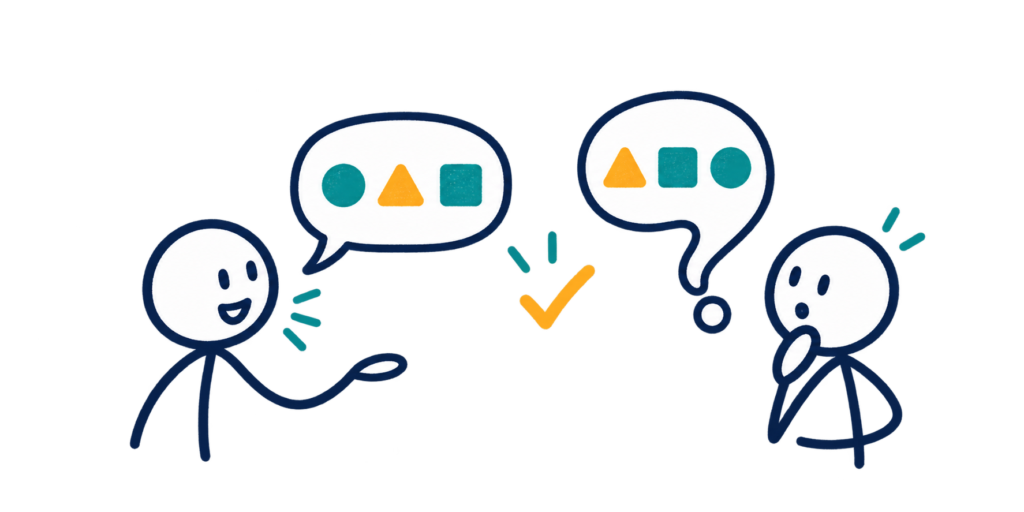
Start any rephrase for yes with either “Are you saying (rephrase)?” or “Do you mean (rephrase)?”
A Rephrase Question (R4Y) reflects something the person has already communicated that we might want to respond. This non-FOUL might include an:
- idea,
- thought,
- memory,
- belief,
- feeling,
- experience, or
- factual statement.
The listener puts the message into different words and presents it as a question. This invites the speaker to consider the rephrase and either confirm or correct it.
A good R4Y is respectful, focused, and based directly on what the speaker has said. Because it deals with something important to that person, it can encourage attentive listening, reflection, and cooperation in the form of an answer: “Yes”.
Why Rephrase Questions Matter
In PeaceDNA, questions are the primary form of communication. They are the “coin of the realm” in peacemaking because they invite thought and create time to consider what has been said. It directs attention rather than demanding it.
Conflict often speeds the pace of back-and-forth communication. People interrupt, defend themselves, make assumptions, and react before they fully understand one another (or even themselves). As emotions become “hotter,” careful and reflective thinking may become more difficult, more hurried, less influential.
A relevant question can slow the interaction down in a constructive way because questions can:
- create an initial point of cooperation,
- confirm that a message was heard,
- give people time to think,
- reduce misunderstandings,
- bring unspoken feelings into the conversation,
- lower the risk of an immediate counterattack (counter-FOUL), and
- help participants develop a more complete account of what happened, how they feel, and why.
These are PeaceDNA communication premises. They should not be treated as guarantees about how every person will respond. Tone, timing, trust, culture, trauma, and the surrounding situation can all affect the result. Proceed with caution but also have confidence in your learnings.
The Structure of a Rephrase Question
PeaceDNA uses a simple formula to create a question from a rephrase. Begin with just 3 words:
“Are you saying …?”
or:
“Do you mean …?”
For example:
“Are you saying you felt ignored when the decision was made without you?” or
“Do you mean you were less upset about the decision itself and more upset about not being consulted?”
These openings matter because they frame the rephrase as a question—not as a claim, judgment, diagnosis, or accusation. The speaker must be free to answer:
- “Yes.”
- “No.”
- “Not exactly.”
- “That is part of it.”
- “Let me explain it differently.”
The listener’s job is not to argue, correct, or prove a point. The immediate goal is to restate the person’s meaning accurately. When the speaker answers “yes,” the participants have created a small moment of agreement. That agreement can confirm understanding, support cooperation, and change the emotional direction of the interaction.
At the beginner level, an R4Y should:
- restate only what the person has communicated,
- avoid adding new motives, meanings, or consequences,
- remain respectful and neutral,
- evoke Kanji Listening
- use language the speaker can recognize, and
- genuinely invite confirmation or correction.
Rephrasing Changes the Words—not the Meaning
Rephrasing means expressing the same basic message in different words. You are not simply repeating the speaker word for word. You choose language that fits the person and situation while preserving the meaning of the original message.
A strong R4Y:
- is short enough to follow,
- sounds genuine,
- avoids exaggeration,
- does not insert blame,
- avoids diagnosing the speaker,
- separates facts from beliefs and feelings when useful, and
- naturally invites an honest answer, “yes”.
Softer or clearer words may be helpful when the original language was insulting or emotionally charged. For example, instead of repeating:
“He came in acting like a loudmouth idiot.”
A mediator might ask:
“Are you saying his loud and energetic behavior felt irritating and disrespectful to you at that moment, even dangerous?”
The offensive label has been removed, but the speaker’s experience has not been erased. The basic reminder is:
Do not get clever. Seek an honest “yes.”
Using an R4Y to Bring Out Deeper Emotions
A mediator can use Rephrase Questions to help participants identify emotions that may be beneath anger, blame, or harsh language. This should be done carefully. The mediator should not tell people what they feel or push them to reveal something they are not ready to discuss.
Instead, the mediator offers a possible rephrase based only on what the person has already communicated. If an event or thought feels too painful, private, or difficult to name, the person and mediator may agree on a neutral substitute word. This allows them to refer to the subject without describing it directly. “X hurt me.”
Example: Moving Beneath Anger
Person:
“He did not even ask me. He just made the decision and expected me to accept it.”
Mediator:
“Are you saying you felt left out of a decision that affected you?”
Person:
“Yes.”
Mediator:
“Do you mean being left out also made you feel that your opinion did not matter?”
Person:
“Yes. That is what really bothered me.”
The mediator did not begin by announcing, “You feel unimportant.” That could sound like a diagnosis. Instead, each question tested a possible understanding and allowed the person to confirm or correct it.
Example: Exploring Hurt Beneath Anger
Person:
“I’m furious that she told everyone before talking to me.”
Mediator:
“Are you saying you expected her to speak with you privately first?”
Person:
“Yes.”
Mediator:
“Do you mean you felt exposed when other people learned about it before you had a chance to respond?”
Person:
“Yes—and embarrassed.”
Mediator:
“Are you saying the embarrassment is part of what is fueling your anger?”
Person:
“Yes.”
This series of short questions helps uncover emotional layers without forcing a conclusion. The speaker remains the authority on their own experience. Repeating the same 3 words over and over at the beginning may sound ingenuous, so consider using other rephrased question words: “Do you mean…?” & “Did I get this right…?”
Using an R4Y When You Feel Defensive
Rephrase Questions are also useful when you are personally involved in the conflict. When you feel accused, your first impulse may be to explain yourself, deny the accusation, or point out what the other person did wrong. An R4Y can create a brief pause before you defend your position and give time a moment to work.
This does not require you to agree that every accusation is true. You are confirming your understanding of the other person’s message—not admitting guilt or giving up your own viewpoint.
Example: Pausing Before Defending Yourself
Coworker:
“You never keep me informed. I always find out about changes at the last minute.”
A defensive response might be:
“That’s not true. I sent you two emails last week.”
An R4Y response could be:
“Are you saying that, even though I sent some updates, you did not receive the information early enough to prepare?”
Coworker:
“Yes.”
You can then address the concern without accepting the exaggerated word “never.”
“I understand that timing is the main problem. Would you be willing to look at when the updates were sent and decide what advance notice would work better?”
Example: Responding to a Personal Accusation
Family member:
“You do not care what I think.”
Instead of immediately saying, “Of course I care,” you might ask:
“Do you mean that when I interrupted and made the decision, my actions made you feel that your opinion did not matter?”
If the person says yes, you have confirmed the impact of your behavior. You have not necessarily agreed with the broad claim that you never care.This distinction is important:
Understanding someone’s message is not the same as agreeing with every conclusion they have drawn.
Example of an R4Y During Mediation
Long rephrasing can be useful, but it also carries a greater risk of adding or losing meaning from the speaker. Breaking a complicated account (‘story’) into shorter questions is often safer. Used too much and you will unnaturally drag out a Conflict Position as shown below:
Mediator:
“Are you saying you were already having a difficult day when Joe approached you?”
Person:
“Yes.”
Mediator:
“Do you mean his energetic, talkative manner felt overwhelming at that moment?”
Person:
“Yes.”
Mediator:
“Are you saying you became especially irritated when the conversation turned to gossip about other people?”
Person:
“Yes.”
Mediator:
“and you viewed that behavior as disrespectful, reacted emotionally, and then Joe became offended?”
Person:
“Yes.”
Mediator:
“Do you think the name-calling on both sides made the argument worse?”
Person:
“Yes.”
Mediator:
“And when you had enough, you walked away—but you now regret the name you called out as you left?”
Person:
“Yes.”
Mediator:
“Is there anything important about the experience that I have missed?”
This final question gives the person room to add information. It is often more inviting than simply asking, “Is that all?”
Common Mistakes
A Rephrase Question becomes less effective when it:
- contains several untested assumptions,
- tells the speaker what they “really” feel,
- exaggerates the original message,
- hides criticism inside a question,
- pressures the person to agree,
- sounds mechanical or sarcastic,
- repeats insulting language unnecessarily, or
- becomes so long that the speaker cannot track it.
For example:
“Are you saying you became angry because you are insecure and always assume people are attacking you?”
This is not a neutral rephrase. It adds a diagnosis and an accusation. A better question might be:
“Are you saying his comment felt like a personal attack?”
The speaker can then confirm, reject, or refine that understanding.
Summary
A Rephrase Question restates a person’s message in new words and asks whether the restatement is accurate. Its immediate purpose is to create understanding and, when accurate, an honest point of agreement. To get the answer “yes”. In conflict, an R4Y can:
- slow reactive communication,
- show that a person has been heard,
- uncover feelings beneath anger or blame,
- reduce the urge to argue,
- help a defensive listener pause,
- separate understanding from agreement, and
- give participants a shared starting point.
The method also has value outside formal conflict. Rephrase Questions can support:
- Parenting: “Are you saying you want help, but you also want to make the final choice yourself?”
- Teaching: “Do you mean you understand the formula but are unsure when to use it?”
- Healthcare: “Are you saying the medication reduced the pain but made you too tired to function normally?”
- Leadership: “Do you mean the goal is clear, but the deadline does not seem realistic?”
- Customer service: “Are you saying the product works, but it does not include the feature you expected?”
- Friendship: “Do you mean you were not asking for advice—you mainly wanted me to listen?”
- Self-reflection: “Am I saying I am angry, when I may also be disappointed or afraid?”
In each setting, the same standard applies: preserve the person’s meaning, ask rather than declare, and leave room for correction. It’s a skill like no other because it is so useful and applicable in everyday life, well outside of Conflict resolution.
Red-Team Review
1. The Skeptical Participant
A participant may see repeated yes/no questions as a technique for controlling the conversation or building a chain of admissions. This risk increases when the mediator speaks quickly, uses leading language, or appears focused on getting a “yes” at any cost.
Safeguard: Explain that correction is welcome. Use open follow-up questions, and never treat a “yes” as consent to claims that were not included in the question.
2. The Trauma-Informed Practitioner
Questions that dig for deeper emotions can make someone feel exposed, analyzed, or unsafe. A person may agree merely to end the questioning, please the mediator, or avoid further attention.
Safeguard: Ask permission before exploring sensitive feelings, watch for signs of distress, allow silence, offer breaks, and accept that a person may not want to discuss an emotion. Rephrasing should support choice—not override it. Use metaphor.
3. The Mediator or PeaceDNA Trainer
Beginners may produce long, complicated rephrases that mix facts, beliefs, feelings, and interpretations. A single “yes” may then hide disagreement with part of the question. Kanji Listen.
Safeguard: Keep early R4Ys short. Test one or two ideas at a time, distinguish observed events from interpretations, and periodically ask, “What did I miss?” Accuracy is more important than collecting agreement.
Comment